
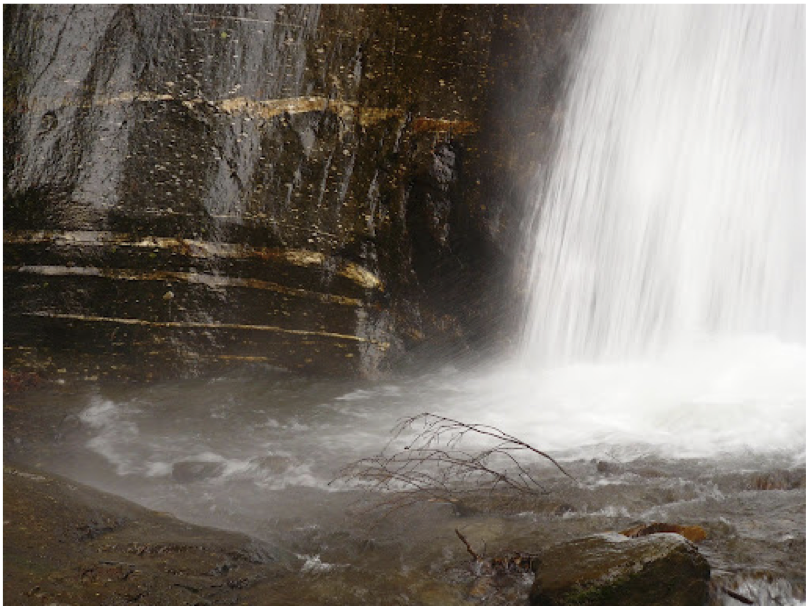
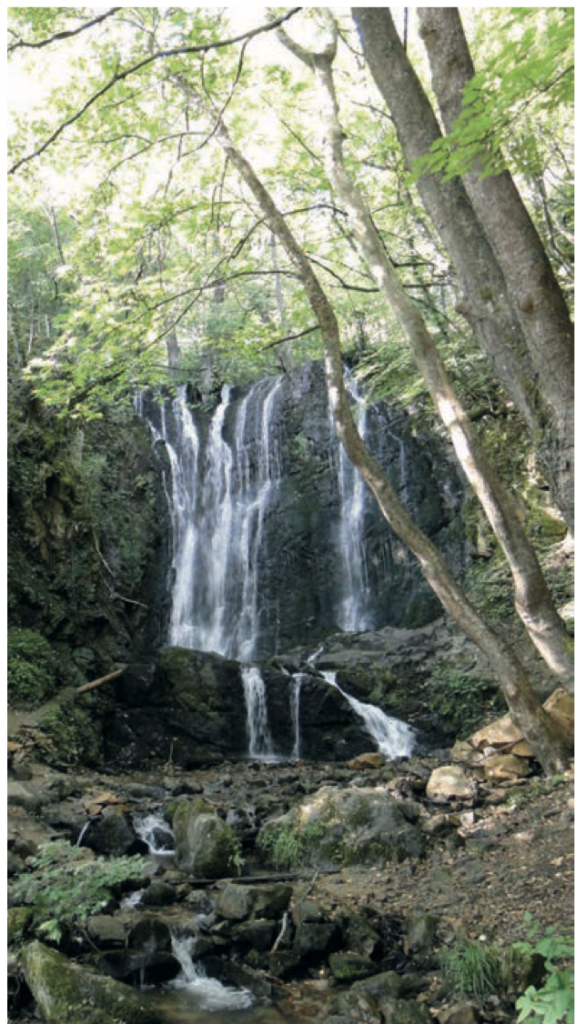
The village of Kolesino famous for and more recently also for its marvellous waterfalls lies in the foothills of the picturesque Belasica mountain in the south-eastern part of Macedonia. Since the area around the waterfalls had been made accessible and tourist friendly, the village became an important point on tourist maps. Spiritual richness and natural beauty attract visitors to this remote corner of Macedonia. What is the spiritual magic of the diligent farmers, famous for their watermelon and peanuts, living at the altitude of 610 m. Imagine a community of 400 households with 1,300 residents having members of the Orthodox, Catholic and Protestant Churches. And the Protestant believers are further divided into Evangelical-Methodist Church, Adventist Church, Church of Jehovah’s Witnesses, Baptists and Pentecostals.
The older residents, when asked about the different denominations, would usually count the village churches and the families attending the ceremonies. St. Spas Orthodox Church is visited by 160 families and is over 200 years old, the Evangelical – Methodist Church is visited by 60 families, the Adventist church is attended by 15 families, and the Church of Jehovah’s Witnessis visited by 10 families. The great variety of believers in this village has given rise to the saying “Whatever mother had lost her child, she will find him/her in Kolesino.” When did this unique religious richness come into being? First, the village is believed to be very old. In the legends, the name of the village is connected with the famous battle between Tsar Samuel and the Byzantine emperor Basil II on the Mount Belasica in 1014. They say “Kolezh ” (slaughter) comes from the “terrible slaughter of the Macedonian soldiers defeated in the battle.
Although, as if to illustrate to the notorious relativity of each oral source, the second legend associates the name with the first resident of the village who was called Kole and when people passed by his sheepfold they said “this is Kolesino” meaning “this belongs to Kole”. So the first residents are believed to have been Orthodox Christians. The Evangelical-Methodist Church in Kolesino is believed to have been born with the arrival of the famous protestant missionary from America, Miss Stone, who travelled through Macedonia and visited these areas on her journey towards the Pirin area of Bulgaria. The story of Miss Travel Stone was recorded by the media in the beginning of the twentieth century, when the rebel komiti kidnapped the missionary, received a ransom and bought weapons to fight for the liberation of Macedonia. This incident became a myth which raised the international awareness of the Macedonian fight for liberation and was the subject of many historical books as well as film and literary works. The first Evangelical- Protestant church was built in 1934. During the Second World War it was put on fire. In 1967 it was restored, this time as a Methodist church. The 1970s are regarded as the decade when the different denominations blossomed. As a curiosity, the Kingdom of Jehovah’s Witnesses in Kolesino was established after the first congress of Jehovah’s Witnesses held in the village in 1973. The first members of this religious group in Macedonia appeared in Strumica in 1938, under an influence of the Tuchek Slovenian couple who resided there, the first community of Jehovah’s Witnesses having been founded in the The Adventist church, whose believers are called Adventists or sabotjans, was also established in the 1970s. The group acknowledges Saturday and not Sunday as the day of rest.
The survival of these denominations in Yugoslavia was very difficult. For instance, the authorities penalized the believers who refused to work on Saturdays. Of course the residents also recalled many disagreements on religious grounds among themselves; but they say this is how the tolerance was built. The most common disagreements among denominations cited by the older residents centred on matters of marriage. In the early days, only same-denomination marriages were accepted. Then the residents accepted that “they cannot do anything against love.”
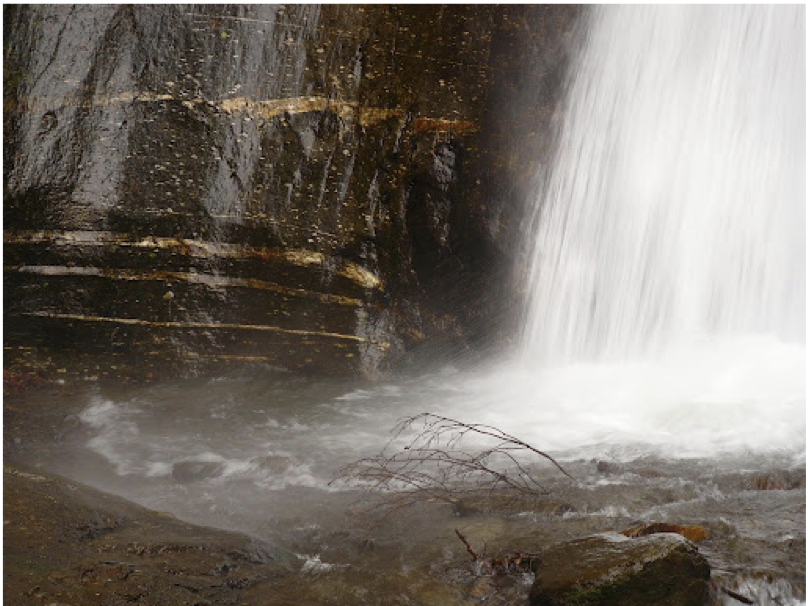
So, it was decided that in case of inter-denominational marriages the bride would accept the faith of the groom. The achieved level of religious coexistence is reflected in the existence of the single village cemetery where all the villagers of different denominations are buried together, just as they live together. Kolesino Waterfalls are located in the lower reaches of the river Baba, on the slopes of the Mount Belasica in a picturesque landscape, surrounded by beautiful maple trees and stone cliffs at an altitude of 630 m. The biggest, with a height of fifteen meters, is one of the highest waterfalls in Macedonia, and is about six meters wide. Opposite this main Kolesino waterfall, there are several smaller waterfall located in a row with a height of two to four meters. The wonderful scenery and nature leave no one indifferent.
Recently the Orthodox Church has started to perform unique group weddings at the Kolesino Waterfalls. This happens in July when many people from the region who work abroad return home. The wedding ceremony adds to the attractions of the place. And finally, another curiosity connected with Kolesino is the famous Macedonian book for children, The white gypsy. Its author, Vidoe Podgorec, who hails from Kolesino, drew his inspiration from the landscapes of his native village lying in the thick shadow of the maples.
By Jasmina Mazgalieva
J u n e 2 0 1 2